


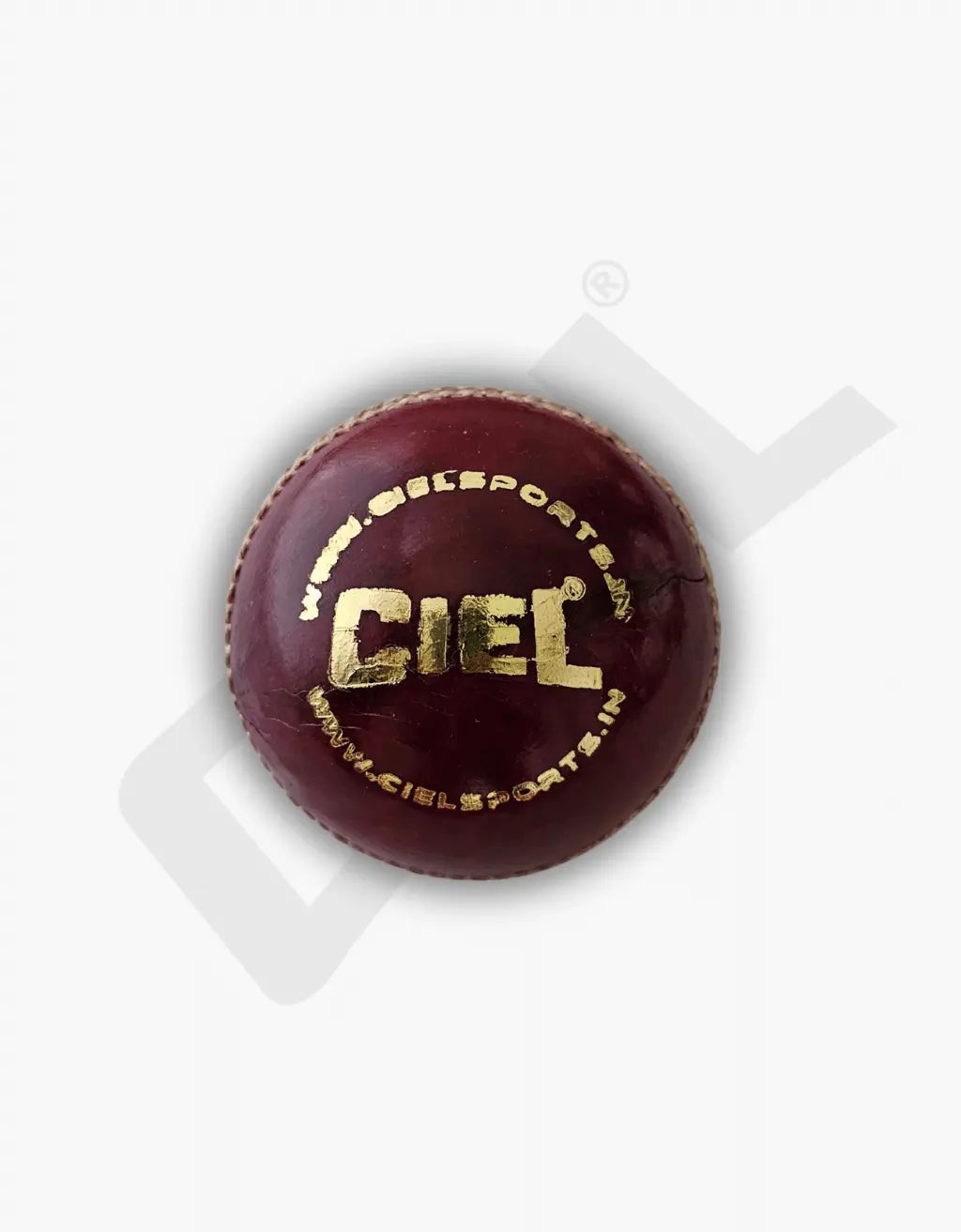
Home/Leather Cricket Balls/Thunder
40+ overs · 155–163g · Made in Meerut
ThunderLeather Cricket Ball — 4-Piece Hand-Stitched, Set of 6
Forty-plus overs of club cricket and practice. The ball most teams end up ordering by the season. Alum-tanned cowhide over a wound cork core, hand-stitched seam, 155–163g match weight. Red, white or pink.
Set of 6 balls · You save ₹1,100 · Free shipping across India

Overview
Thunder leather cricket ball — leather cricket ball for club cricket
The Thunder is a 4-piece hand-stitched leather cricket ball made in our own Meerut facility. Alum-tanned cowhide over a wound cork core, a raised hand-stitched seam, and a match weight of 155–163g with a circumference of 22.4–22.9cm. It is rated for 40+ overs and available in red, white and pink.
Every ball we sell comes as a set of six. That is how clubs, academies and teams actually buy, and it is why the price you see is a set price. At ₹3,800 that is roughly ₹633 a ball. If you need a single ball or a different quantity, message us and we will sort it out.
We manufacture these from the cork core through to the stitched cover. There is no distributor, wholesaler or retailer in the price — which is the entire reason a hand-stitched alum-tanned ball costs what it does here.
What makes this one different
The ball clubs actually get through
Most cricket is not a fifty-over final. It is a Saturday league game and three nets sessions, week after week — and that is what the Thunder is built for.
Clubs and academies do not buy one ball. They buy sets, every season, and they get through them. The question that matters is not "which is the best ball we can buy" but "which ball gives us the most cricket per rupee across a season".
The Thunder is our answer to that. Forty-plus overs of match life, full 155–163g match weight, hand-stitched 4-piece construction in premium alum-tanned leather. It holds its seam through a league innings and then goes into the nets bag rather than the bin, which is where most of a ball's real working life happens.
At ₹3,800 for six — ₹633 a ball — it sits between the T20-focused Strike and the fifty-over Dominator. For a club buying several sets a season, it is usually the right call, and we sell more of these than anything else.
Choose your colour
Red, white or pink?
Identical construction, identical weight. Only the dye changes — but which one you want depends entirely on when you play.
Test and day first-class cricket. Best visibility against a green outfield in daylight, and the traditional ball for the long format.
Limited-overs cricket under floodlights. Far more visible than red under artificial light, which is why ODIs and T20s use it.
Day-night Test cricket. Combines red-ball durability with visibility through twilight, when red disappears and white glares.
Official standards
Cricket ball weight — the regulation figures
Ball weight is set by the Laws of Cricket and it differs by category. Every ball we make is weighed before packing to confirm it falls inside the men's range.
| Category | Ball weight | In ounces | Circumference |
|---|---|---|---|
| Men's cricket | 155.9–163g | 5.5–5.75 oz | 224–229mm |
| Women's cricket | 140–151g | 4.94–5.32 oz | 210–225mm |
| Junior, under 13 | 133–144g | 4.69–5.08 oz | 205–220mm |
We currently make balls to the men's standard only. If you need women's or junior weights for a club or academy, message us on WhatsApp and we will tell you what we can do.
Full specification
Thunder — technical detail
| Specification | Thunder |
|---|---|
| Match life | 40+ overs |
| Leather grade | Premium alum-tanned leather |
| Construction | 4-piece, hand-stitched |
| Leather | Alum-tanned cowhide |
| Core | Wound cork core |
| Seam | Hand-stitched, raised |
| Weight | 155–163g |
| Circumference | 22.4–22.9 cm |
| Colours | Red · White · Pink |
| Sold as | Set of 6 balls |
| Made in | Meerut, Uttar Pradesh, India |
The full range
Three leather cricket balls
Same 4-piece hand-stitched construction, same 155–163g match weight, all in red, white and pink. What changes is the leather grade, and therefore how long the ball stays good.
Behind the seam
How a leather cricket ball is made
A cricket ball is one of the most precisely built objects in sport, and almost nobody has seen one being made. This is ours, from cork to finished seam.
| Stage | What happens |
|---|---|
| 1 · Cork core | Cork granules are compressed into a precise sphere. This is what determines the ball's bounce, and it is where the weight starts. |
| 2 · String winding | The core is wound tightly with string under controlled tension, building density and shape and bringing the ball toward regulation weight. |
| 3 · Cutting & dyeing | Four pieces of alum-tanned cowhide are cut and dyed red, white or pink, then shaped to fit the wound core. |
| 4 · Hand-stitching | Craftsmen in Meerut stitch the seam by hand in six rows. That raised ridge is what a bowler grips and what makes the ball swing. |
| 5 · Weight check | Every ball is weighed and measured before packing to confirm it falls inside the 155–163g match range. |
Looking after them
Ball care — and the one mistake almost everyone makes
| Do this | Why it matters |
|---|---|
| Dry it before storing | Damp leather softens permanently and loses shape. Wipe the ball down and let it dry at room temperature after every session. |
| Polish one side, not both | Swing comes from the difference between the two sides. Polishing the whole ball evenly removes exactly the asymmetry that makes it move. |
| Keep it out of direct sun | Sunlight dries and cracks the leather cover, and a cracked cover will not hold a seam. |
| Store cool and dry | Never a car boot and never a damp kit bag. Heat and moisture are what age a ball fastest between matches. |
The mistake is polishing both sides. Swing comes from the difference between a shiny side and a rough one — air moves differently over each, and that imbalance is what bends the ball's flight. Polish the whole ball evenly and you have made it beautifully symmetrical and stopped it swinging. Shine one side, leave the other alone.
Questions players ask
Thunder leather cricket ball — frequently asked questions
Is the Thunder sold as a single ball or a set? +
A set of six balls. Every Ciel Sports leather cricket ball is sold in sixes, which is how clubs, academies and teams actually buy them. At Rs 3,800 the set, that works out at roughly Rs 633 per ball. If you need a single ball or a different quantity, message us on WhatsApp at +91 95481 82993 and we will sort it out.
What is the standard cricket ball weight? +
For men's cricket the ball must weigh between 155.9 and 163 grams, which is 5.5 to 5.75 ounces, with a circumference of 224 to 229mm. Women's cricket uses a lighter ball at 140 to 151 grams, and junior cricket under 13 uses 133 to 144 grams. Every ball we make falls inside the men's range and is weighed before packing.
How long does the Thunder last? +
40+ overs. That is match life, and a ball that has finished its match life is usually still perfectly good for nets, which is where most balls do the majority of their work. What ends a ball for good is a cover that has gone out of shape or a seam that has flattened, not scuffing.
What is the difference between red, white and pink cricket balls? +
The construction is identical and so is the weight. Only the dye changes. Red is used in Test and day first-class cricket and shows up best against a green outfield in daylight. White is used in limited-overs cricket under floodlights, where it is far more visible than red. Pink is used in day-night Tests, because it keeps red-ball durability while staying visible through twilight when red disappears and white glares.
What is a leather cricket ball made of? +
Three things. A cork core at the centre, string wound tightly around it for density and shape, and a four-piece alum-tanned cowhide cover stitched together by hand in six rows to form the raised seam. Alum tanning produces a firmer hide than chrome tanning, which is what lets the ball hold its shape and its seam through a long innings.
Why does the seam matter so much? +
The seam is what a bowler grips and what makes the ball move in the air. A pronounced, hand-stitched seam gives a fast bowler something to hold the ball upright with, and gives a spinner purchase to turn it. When a seam flattens, the ball stops swinging and stops gripping. That is why we hand-stitch every ball rather than machine-stitching, and it is the single biggest difference between a good ball and a cheap one.
Which Ciel Sports ball should I buy? +
Strike at Rs 2,900 for T20 and short-format cricket. Thunder at Rs 3,800 for club matches and practice, which is what most teams end up ordering by the season. Dominator at Rs 4,900 for fifty-over cricket and tournaments, built to hold shape and seam through a full innings. All three are the same 4-piece hand-stitched construction at the same match weight - what changes is the leather grade and therefore how long the ball stays good.
How should I look after a leather cricket ball? +
Dry it before storing, because damp leather softens permanently. Polish one side rather than both, because swing comes from the difference between the two sides and polishing evenly removes it. Keep it out of direct sun, which cracks the cover. Store cool and dry rather than in a car boot or a damp kit bag.
Do you supply cricket balls to clubs and academies in bulk? +
Yes, and it is most of what we do with balls. Every order is already a set of six, and larger orders for a full season are straightforward. Message us on WhatsApp with the quantity, the ball and the colours you need and we will quote directly.
Do you ship cricket balls internationally? +
Yes, to more than 50 countries including the UK, Australia, USA, UAE, Canada, New Zealand and South Africa. Shipping within India is free. International shipping is calculated at checkout with typical delivery of 8 to 14 days.
Are these balls made by Ciel Sports? +
Yes. We manufacture them in Meerut, Uttar Pradesh, from the cork core through to the hand-stitched cover. We are a manufacturer rather than a reseller, which is why a hand-stitched alum-tanned ball costs what it does here rather than what the same ball reaches once it has passed through a distributor and a retailer.
What cricket bat should I use with a leather ball? +
A bat built for leather ball cricket, which means English willow or Kashmir willow rather than a tennis ball bat. Our Kashmir willow range starts at Rs 4,499 and our English willow range at Rs 7,999. Using a hard tennis bat against a leather ball will damage the bat quickly.
Also in the range
The other leather cricket balls
Strike
Built for T20 and short-format cricket, where a ball has twenty overs to do its work rather than fifty. The most accessible set we make.
Dominator
Fifty-plus overs without losing shape, shine or seam. The ball for tournaments and league finals.
Made in Meerut
Buy the Thunder — set of 6
4-piece hand-stitched · Alum-tanned cowhide · Wound cork core · 155–163g match weight · 22.4–22.9cm · 40+ overs · Red, white or pink · Set of 6 (roughly ₹633 a ball) · Free shipping across India · Ships to 50+ countries
Free Name Engraving Worth Rs 599
Only On Prepaid Orders
