
Duckbill vs Full ProfileThe two extremes of bat shaping — and which one your batting actually needs
These are the two ends of the spectrum. A duckbill removes willow to sharpen the sweet spot; a full profile keeps every gram to eliminate weak zones. They are opposite answers to the same question, and the right one depends entirely on where your bat actually meets the ball.

The physics: what a profile actually changes
Every bat begins as a cleft of roughly the same volume of willow. Shaping does not add anything — it only decides where the willow stays and where it is taken away. That single decision changes three things, and understanding them makes the whole choice obvious.
1. Where the sweet spot sits
The sweet spot is where the blade returns the most energy to the ball, and it sits where the mass is concentrated. Pile willow in the mid-blade and you get a pronounced sweet spot there. Spread it evenly and you get a broader, less pronounced one covering more of the face.
This is a genuine trade rather than a marketing choice. You cannot have both a sharply defined sweet spot and a uniformly strong blade, because they require the willow to be in different places.
2. Where the balance point sits
This is the part almost nobody explains, and it matters more than weight.
Two bats can weigh exactly the same on a scale and feel completely different in your hands. Mass sitting near the toe is far from your grip, so it takes more effort to swing — the bat feels heavy. Move that same mass up toward the middle and the bat feels light, without a single gram being removed.
A duckbill takes willow out of the toe. That is why it picks up lighter than its weight suggests. A full profile keeps it. That is why it feels heavier than the number on the scale.
3. How forgiving the blade is
Forgiveness means what happens when you do not middle it. A blade with willow behind every part of the face still transfers energy on a mishit. A blade that has been scooped out in places will feel dead where the willow was removed.
The whole comparison in one sentence: a duckbill is optimised for the shots you middle, and a full profile is optimised for the shots you do not.
The duckbill profile in detail
Named for the flattened, tapered toe that resembles a duck's bill. In India it is often called the VK profile, after the batting style it suits.
The shape
- Spine rises steeply from the shoulder and peaks around the middle of the blade
- Tapers sharply from that peak down toward the toe
- Toe is flatter and thinner, with noticeably less willow than the mid-blade
- Pronounced concaving on the back to remove weight from the edges
- Edges stay thick despite the reduced overall mass
What it does for you
A precise, powerful sweet spot. The mid-blade concentration means that when you middle the ball, the return is exceptional — more so than a full profile of the same weight, because the willow is exactly where you struck it.
A light pickup. Removing toe mass pulls the balance point up. The bat comes through the line quickly, which matters for late adjustments against pace and for playing the ball under your eyes.
Control over power. A duckbill rewards timing rather than force. You are not muscling the ball; you are letting the shape do the work when you connect properly.
What it costs you
Forgiveness low on the blade. The willow that would have caught a toe-end contact has deliberately been removed. A ball struck near the toe of a duckbill feels dead, and on a low-bounce pitch that happens more often than you would like.
Less margin on mishits. Off-centre contact is punished more than on a fuller shape. That is the direct cost of the sharper sweet spot.
Who it suits
Technically sound players who consistently middle the ball. Front-foot drivers — straight, cover, on-drive. Players who bat on turf with true bounce. Longer formats where you have time to play properly. Anyone whose game is built on timing rather than raw power.
The full profile in detail
The opposite philosophy. Instead of removing willow to sharpen one zone, a full profile keeps as much as possible everywhere.
The shape
- High spine that runs from shoulder to toe without a dramatic peak or taper
- Minimal or no concaving on the back of the blade
- Thick edges maintained down the full length
- Fuller, often squarer toe with substantial willow retained
- Every part of the face has mass behind it
What it does for you
No weak zone. This is the entire point. Contact anywhere on the blade — high, low, toward the edge — still has willow behind it and still transfers energy. For a player who does not middle every ball, that is worth more runs over a season than a sharper sweet spot ever earns.
Power low on the blade. Balls that arrive below the middle, which is most of them on a low or uneven surface, still come off properly.
Durability. More willow means more material to absorb repeated impact. Full profiles generally survive harder use.
What it costs you
Pickup. Retained toe mass pushes the balance point down, away from your hands. A full profile at 1,220g feels considerably heavier through a swing than a duckbill at the same weight. Over a long innings that is real fatigue, and a tired player plays late.
You have to be strong enough. There is no point owning a bat you cannot swing properly. A player using a full profile they cannot control will play worse than the same player with a lighter shape.
Who it suits
Power hitters and cross-bat players. Anyone on low-bounce, uneven or matting surfaces. T20 and short-format cricket where you are attacking from ball one. Players who frequently make contact away from the exact middle — which is most club cricketers, honestly.
Head to head, across nine measures
| Duckbill | Full profile | |
|---|---|---|
| Mass distribution | Concentrated mid-blade | Even, shoulder to toe |
| Sweet spot | Small, sharply defined, powerful | Broad, even, no weak zone |
| Balance point | High, close to the hands | Low, toward the toe |
| Pickup | Light for its weight | Heavy for its weight |
| Concaving | Pronounced | Minimal or none |
| Low on the blade | Weak — willow removed | Strong — willow retained |
| Mishit forgiveness | Moderate | High |
| Rewards | Timing and precision | Power and margin for error |
| Fatigue over a long innings | Lower | Higher |
Which pitches suit which
This is the most reliable single factor, and it is the one players think about least.
| Surface | Where the ball arrives | Better profile |
|---|---|---|
| Good turf, true bounce | Consistently around the middle | Duckbill |
| Hard, bouncy tracks | At or above the middle | Duckbill |
| Low, slow wickets | Below the middle, often near the toe | Full profile |
| Matting over concrete | Skids low and fast | Full profile |
| Uneven club grounds | Unpredictable | Full profile |
| Mixed — you play everywhere | Varies week to week | Neither — see below |
If you play on several different surfaces through a season, both of these extremes will let you down somewhere. That is a real answer, and we cover what to do about it further down.
Which format suits which
- Test and multi-day cricket — duckbill. You have time to play properly, you are batting for hours so pickup fatigue matters, and you are middling a high proportion of what you face.
- 50-over cricket — either, depending on where you bat. Top order leans duckbill, middle and lower order leans full.
- T20 — full profile. You are attacking from the first ball, you will mishit under pressure, and forgiveness earns more than precision when you are trying to clear the rope.
- Net practice and academy cricket — full profile, generally. High volume, repeated impact, and you want the bat to survive.
See both shapes in the hands of the people who make them
Spine shape is genuinely hard to picture from a description. Our bat makers go through the profiles on camera with the bats in hand.
And if you want to see where a profile is actually created — cleft selection, the eight hydraulic press stages, then hand shaping — this is our workshop in Meerut.
Four mistakes people make choosing between them
1. Choosing the profile a professional uses
The duckbill is associated with a particular international batsman, and that is why a great many club cricketers buy it. But a professional middles a far higher proportion of deliveries than a club player, on far better surfaces. The shape that rewards them may punish you.
2. Assuming full profile means heavy
It means the mass is distributed differently, not that there is more of it. A full profile and a duckbill can weigh the same. What differs is where that weight sits and therefore how it feels. If pickup is your concern, ask about the balance point, not the weight.
3. Confusing edge thickness with profile
Thick edges are a separate feature. You can have a duckbill with 42mm edges and a full profile with 40mm. Edge thickness is about the outer dimension of the blade; profile is about the spine and the distribution along its length. Sellers frequently blur the two.
4. Not knowing where you actually hit the ball
Most players guess. The answer is on your current bat — look at the wear marks on the face. A concentrated patch in the middle means a duckbill will reward you. Marks spread down toward the toe mean a fuller shape will save you runs. It takes ten seconds and it is better evidence than any article.
Go and look at your old bat now. The ball has been telling you which profile you need for as long as you have owned it. That wear pattern is the single most reliable piece of information in this entire decision, and it costs nothing to check.
How to actually decide
Answer these four. If three point the same way, that is your profile.
- Where are the wear marks on your current bat? Middle means duckbill. Spread low means full.
- What surfaces do you mostly play on? True bounce means duckbill. Low or uneven means full.
- How do you score most of your runs? Driving on the front foot means duckbill. Hitting hard, square or over the top means full.
- How long are your innings? Long, patient innings favour the lighter pickup of a duckbill. Short, aggressive ones favour a full profile.
If the answers are split
They often are, and there is a sensible answer: neither extreme.
Our mid-to-low swell profile sits between the two and it outsells both of them here by a wide margin. It keeps enough mass low to be forgiving without stripping the toe the way a duckbill does, and it picks up considerably better than a true full profile. For a club cricketer playing on mixed surfaces across a season, it is usually the right call — and we would rather tell you that than sell you an extreme you do not need.
The traditional full profile is the other middle option: a continuous spine with uniform distribution that behaves the same in every condition. It excels at nothing and fails at nothing.
Both are covered in our guide to all five profiles.
Our bats in each profile
Profile is free on every bat we make. Choose it, and your handle shape, toe shape, size, exact weight and laser engraving, at no extra cost.
Available in both duckbill and full profile
- Player Edition Kashmir willow — ₹5,999. Player Grade cleft, 40–43mm edges, 1150–1250g, nine sizes. Our best-selling leather ball bat.
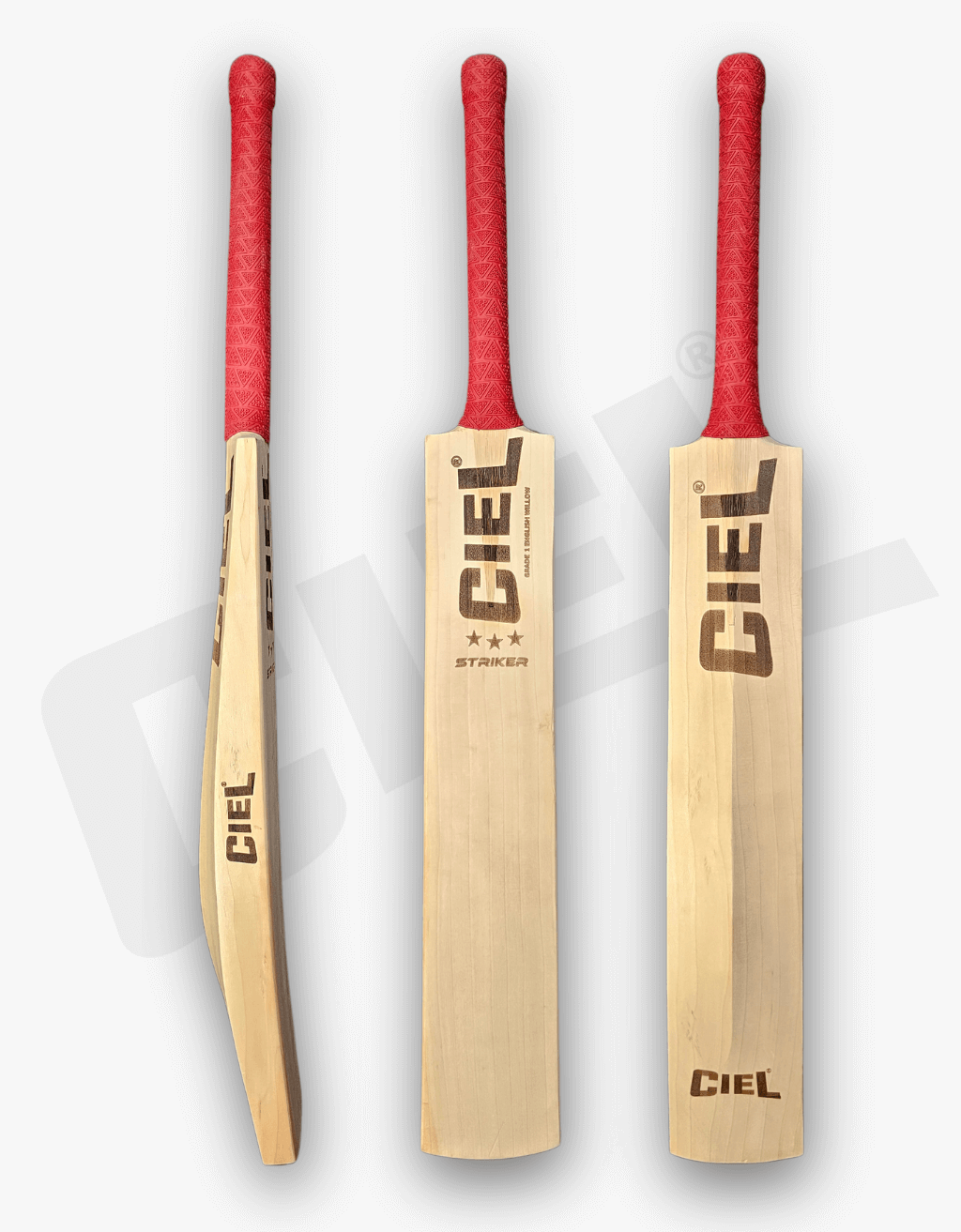
- Striker — ₹20,999. Genuine Grade 1 English willow, 6–7 grains, 40–42mm edges.
- Dominator — ₹36,999. Grade 1+, 7–9 grains. Our most chosen English willow bat.
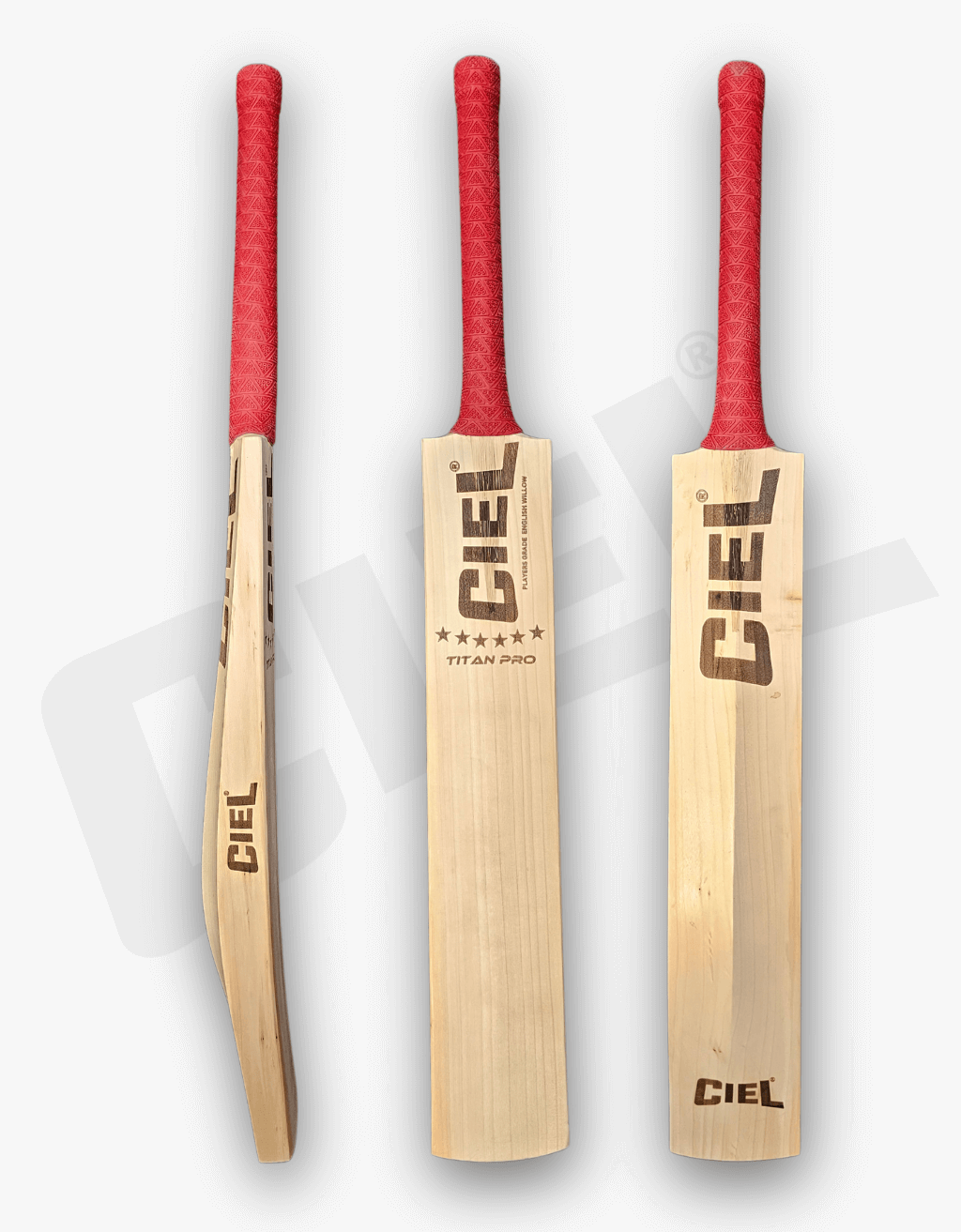
- Titan Pro — ₹49,999. Player Grade, 8–12 grains.
- All nine English willow bats — ₹7,999 to ₹59,999.
Built in a fixed full profile
Two bats do not offer the choice, and it is worth saying why. The Inferno at ₹23,999 and the Apex Limited at ₹42,999 are built in one fixed full profile with no concaving at all — every gram stays in the blade, edges run 42mm and above, and the minimum weight is 1220g.
That geometry is the entire purpose of those two bats. Offering a profile choice would mean removing the thing you are buying them for. Both come in five adult sizes only, because 1220g is unsuitable for junior players.
Questions players ask
Is a duckbill or full profile better? +
Neither, in general terms — and anyone who tells you otherwise is selling rather than advising. A duckbill rewards a player who consistently middles the ball. A full profile protects a player who often makes contact low or away from the middle. The right question is where you actually hit the ball, which your current bat's wear marks will tell you.
Does a duckbill weigh less than a full profile? +
Not necessarily. Two bats can weigh exactly the same and feel completely different, because the balance point differs. A duckbill has less mass at the toe, so its balance point sits closer to your hands and it feels lighter through the swing at identical weight.
Which profile is better for low bounce pitches? +
Full profile, clearly. On low, uneven or matting surfaces the ball frequently arrives below the middle of the blade, and a duckbill has deliberately had willow removed from exactly that area. A full profile keeps mass down toward the toe so low contact still transfers energy.
Which profile did Virat Kohli use? +
The duckbill is widely associated with his style of batting, which is why it is often called the VK profile in India. We name our profiles after the batting styles they suit rather than claiming any endorsement — what matters is the shape and what it does, not whose name is attached.
What if I play on all kinds of surfaces? +
Then neither extreme is right for you. Our mid-to-low swell profile sits between the two and outsells both here by a wide margin — enough mass low to stay forgiving, without the heavy pickup of a true full profile. The traditional full is the other sensible middle option.
Does choosing a profile cost extra? +
No. Profile, handle shape, toe shape, size, exact weight and laser engraving are all included in the price of the bat. The only paid addition is our preparation service at ₹1,000 — oiling, knocking in and fibre tape before dispatch.
Can I get a duckbill on any bat? +
On seven of our nine English willow bats and all four Kashmir willow bats, yes. The Inferno and Apex Limited are the exceptions — both are built in one fixed full profile with no concaving, because that geometry is the purpose of those bats.
Made in Meerut · Built to order
Choose your profile and build the rest
Five profiles · three handle shapes · three toe shapes · your size and weight · laser engraving — all included · 8-stage hydraulic pressing · 12-month handle warranty · free shipping across India