
Best Cricket Bat for Turf WicketsThe surface where a fine cleft finally earns its price — but only some turf does that
“Turf” covers everything from a properly rolled and watered square to a bare outground with grass on it. Those are different surfaces asking for different bats, and treating them as one category is how people buy the wrong one.
Why turf is different
Grass over prepared soil compresses when the ball lands. That does two things a mat cannot.
- It takes energy out of the ball and gives some of it back as bounce, so the ball sits up rather than skidding through.
- It is far less abrasive than coir or jute over a hard base, which means the surface is not working against your bat.
Both matter for what you should buy. Bounce that sits up means contact happens higher on the blade. A kinder surface means a finer cleft is no longer being punished for having less material.
Which is the whole case for English willow, stated honestly. It is selected for response rather than durability — and good turf is the one surface that both rewards the response and spares the durability. On matting you get the worst of that trade. Here you get the best of it.
Four kinds of turf
Because “turf” is not one thing, and the differences between these are larger than the difference between two bat grades.
Well-prepared, true bounce
Rolled, watered and covered. Consistent pace, bounce that sits up, and the ball comes on to the bat.
What it wants: This is where a fine cleft earns its price. Consistency of response is visible every innings because the surface is not hiding it. Buy the grade your cricket justifies and you will feel it.
Points to: Grade 1 and above — Striker upward
Hard and dry, variable bounce
Common in India through the hotter months. Cracks open, the surface bakes, and bounce becomes unpredictable.
What it wants: Consistency of response helps more here, not less — when you cannot predict the ball, you want to be able to predict the bat. But the surface is also harder on a fine cleft, so the two pull against each other.
Green and seaming
Grass left on, moisture underneath. The ball moves off the seam and comes through lower.
What it wants: Pickup and late play matter most. Against lateral movement you want to commit as late as possible, which argues for a lighter, better-balanced bat rather than a heavier one.
Points to: Whatever you own, in a lighter weight and a balanced profile
Slow and low outground
Under-prepared turf, often on club grounds that get limited maintenance. The ball sits down and the pitch takes pace off it.
What it wants: Behaves closer to matting than to a good square. Much of the response advantage is absorbed before it reaches you, while the wear stays.
Points to: Kashmir willow — the same logic as matting
Be honest about which of those you actually play on most. A lot of Indian club cricket described as turf is the third or fourth kind rather than the first — and the fourth behaves closer to matting than to a prepared square.
Bounce decides your profile
The most useful and least discussed part of choosing a bat for a surface.
Where the ball arrives on the blade depends on how high it bounces. On good turf the ball sits up and meets the bat around the middle. On low surfaces it skids in below that. Your sweet spot should be where the ball actually is.
| Surface | Contact height | Profile |
|---|---|---|
| Good turf, true bounce | Mid-blade | Duckbill or traditional full |
| Hard, dry, variable | Mid, unpredictable | Traditional full — behaves the same in every condition |
| Green and seaming | Mid to mid-lower | Traditional full or mid-to-low swell |
| Slow, low outground | Mid-lower | Mid-to-low swell |
Note that this is the opposite recommendation to matting, where low bounce pushes contact down the blade and a duckbill is a poor fit. Same player, different ground, different profile — which is why it is worth choosing rather than accepting.
All five profiles are free on every bat we make. Our profile guide covers each.
Where grade finally pays
We have spent a lot of this blog arguing that grade matters less than people think. Good turf is where the argument turns.
What a higher grade buys is consistency of response — the bat behaving the same wherever on the face you strike it. That property needs two things to be worth paying for:
- A surface that does not hide it. True bounce and consistent pace let you feel the difference between a clean strike and a slightly off-centre one, and let the bat's response show through.
- A player who is middling the ball regularly. Consistency rewards someone who finds the middle. It does very little for someone who does not yet.
On good turf, both can be true. On matting, the first is not. That is the whole difference, and it is why the same bat can be a sensible purchase on one ground and a waste on another.
Which bat
| You are | Buy | Price |
|---|---|---|
| A regular club cricketer on decent turf | Vortex — what we recommend most often | ₹16,999 |
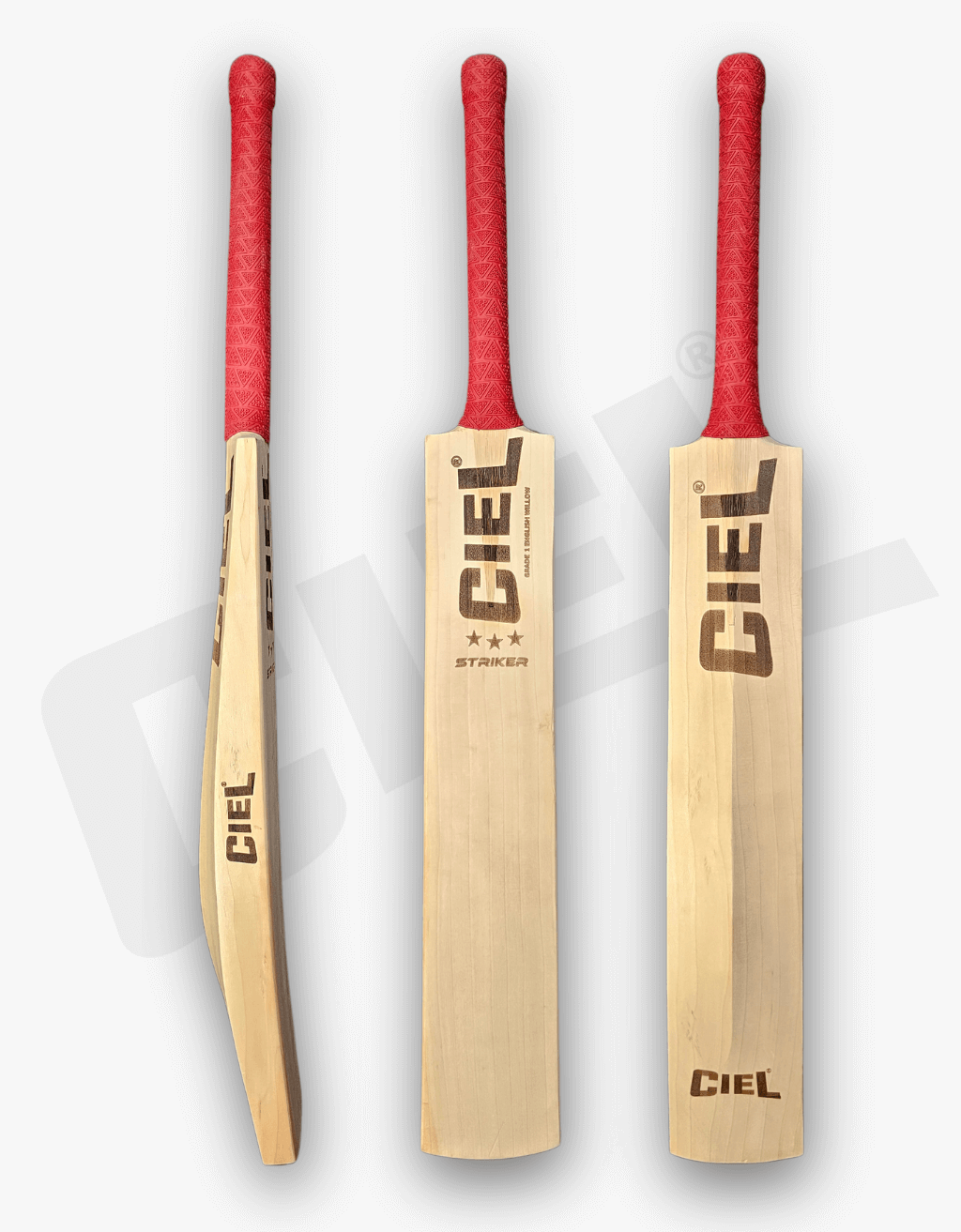
| Middling the ball in competitive cricket | Striker — Grade 1 | ₹20,999 |
| Doing so consistently, every ball counting | Dominator — Grade 1+ | ₹36,999 |
| Playing representative cricket | Titan Pro — Player Grade | ₹49,999 |
| Mostly on slow, low outgrounds | Kashmir willow — Player Edition | ₹5,999 |
That last row is not a consolation option. If your cricket is on under-prepared outgrounds, you are in the same position as a matting player and the same answer applies.
If you play on both turf and matting
Which describes a large share of Indian club cricketers, and it is worth planning for rather than compromising over.
The instinct is to buy one bat that will do for both. The better answer, if you can, is two bats with different jobs:
- English willow for good turf — the surface that lets it show what you paid for
- Kashmir willow for mats, outgrounds and nets — denser, and the right tool where response is hidden and wear is high
A ₹4,499 Academy Edition covering the rough half of your season protects a bat costing four or five times as much. That is the same arithmetic as keeping a separate net bat, and it is the clearest value decision available to a club cricketer.
If one bat is the only option, buy for the surface you play on most rather than the one you enjoy most — and take a traditional full profile, which behaves the same across conditions rather than being optimised for one.
What turf does to a bat
Less than matting, which is the good news. Three things still apply.
- The toe still matters. A prepared square is kinder than concrete, but dragging a bat still wears it — and the toe is end grain that absorbs moisture fastest. Lift it when you walk.
- Damp turf means damp kit. Morning dew and watered squares put moisture into the bat and the bag. Empty the bag and air everything after every session.
- Preparation pays back more here. A properly knocked-in bat on a kind surface will last a long time. A bat that skipped it fails at the same rate wherever you play.
Six to eight hours on English willow, spread over two to three weeks, with at least thirty minutes on the edges. Our guide covers it, or add our preparation service for ₹1,000.
Questions players ask
What is the best cricket bat for turf wickets? +
It depends which turf. On well-prepared turf with true bounce, English willow earns its price - Grade 1 and above, because consistency of response is visible when the surface is not hiding it. On slow, low outgrounds, Kashmir willow is the better tool for the same reasons it suits matting.
Is English willow better on turf than Kashmir willow? +
On good turf, yes - this is the surface English willow is selected for. Prepared turf lets a finer cleft show consistent response across the face, which is the property you are paying for. On poor or under-prepared turf, much of that advantage is absorbed by the pitch before you feel it.
What profile suits turf wickets? +
Duckbill or traditional full for most players on good turf, because the ball sits up and contact happens around the middle of the blade. That is the opposite of matting, where low bounce pushes contact lower and a mid-to-low swell suits better. Profile is free on every bat, so it is worth matching to where you play.
Does a turf wicket damage a bat less than matting? +
Generally yes. Grass is less abrasive than coir or jute over a hard base, and a prepared square is kinder to a toe than concrete. That is part of why a finer cleft makes sense on turf and much less sense on matting - the surface is not working against the timber.
What bat should I use on a hard, dry Indian turf pitch? +
Mid-range English willow rather than the finest cleft you can afford. Variable bounce means you want a predictable bat, which argues for a good grade - but hard, dry surfaces also wear a fine cleft faster. The Vortex at ₹16,999 or the Striker at ₹20,999 sit in the right place.
What bat suits a green seaming wicket? +
Whatever you own, in a lighter weight. Against lateral movement the priority is committing as late as possible, and a lighter, better-balanced bat lets you do that. Mass behind the ball matters less when the problem is the ball moving sideways rather than the ball needing to be hit further.
Should I use a different bat for different pitches? +
Most club cricketers should not buy two bats for two surfaces - but if you play regularly on both good turf and matting or rough outgrounds, a cheaper Kashmir willow bat for the poor surfaces will protect your good one. That is the same logic as keeping a separate bat for nets.
Does bounce affect where the sweet spot should be? +
Directly. On turf with true bounce the ball sits up and meets the bat around the middle, which suits a duckbill or traditional full profile. On low surfaces it skids in below that. A sweet spot in the wrong place for your bounce means your best shots are the ones you hit least cleanly.
Is a heavier bat better on turf? +
Not automatically. Good turf gives you more time than matting does, which makes a heavier bat manageable - but the test is unchanged: can you swing it at full speed and still change shot halfway through? If not, it is too heavy whatever the surface.
Do I need to prepare my bat differently for turf? +
No. Any leather ball bat needs the same knocking in - six to eight hours on English willow, four to six on Kashmir, spread over two to three weeks. What changes on turf is that a well-prepared bat lasts longer than it would on abrasive surfaces, so the preparation pays back more.
Which of your bats suits good turf? +
The Striker at ₹20,999 if you are middling the ball in regular competitive cricket, and the Dominator at ₹36,999 if you are doing so consistently at a level where every ball counts. Below that the Vortex at ₹16,999 is what we recommend most often.
Can I play on turf with a Kashmir willow bat? +
Certainly, and plenty of good club cricket is played that way. You give up some consistency of response compared with English willow, and you gain durability you may not need on a kind surface. It is a reasonable choice, particularly if you also play on mats or rough grounds.
Related: the same question for matting, whether Grade 1 is worth it, and where your sweet spot should sit.
Made in Meerut · Built to order
Tell us your ground. We’ll tell you the bat.
English willow ₹7,999–₹59,999 · Kashmir willow from ₹4,499 · Five profiles free on every bat — worth matching to your bounce · 8-stage hydraulic pressing · 12-month handle warranty · ₹500 now, balance on delivery