
English Willow for Club Cricket: Which Grade Is Right for You?
Club cricket in India covers an enormous range. At one end: a U16 academy player stepping into leather ball cricket for the first time on a cement pitch. At the other: a district-standard first XI opener playing 40-over matches on maidan turf three times a week. Both are club cricketers. Both need an English willow bat. Neither needs the same one. This guide tells you exactly which grade matches your actual level — and why the factory-direct price from Meerut makes the right choice more accessible than most players realise.
- The five levels of club cricket — and what each one actually demands
- Matching English willow grade to club cricket level
- The club cricket bat journey — from first bat to district standard
- The three most common grade mistakes club cricketers make
- Why factory-direct from Meerut changes the grade decision
- Does format matter — T20 vs 40-over vs red ball?
- Complete recommendations by playing level
- Frequently asked questions

The Five Levels of Club Cricket — What Each Demands
Before matching a grade to a playing level, it helps to be specific about what "club cricket" actually means in India — because the term covers a genuinely wide range of cricket quality, frequency and conditions.
Level 1 — Academy and school cricket (U14–U16)
Playing frequency: typically 1–2 times per week in season. Surface: cement, matting or rough turf. Ball: leather, but bowled at moderate pace. The priority at this level is developing technique and enthusiasm for the game — not maximising bat performance. The bat needs to be durable, forgiving and appropriately sized. Performance ceiling is not the primary concern.
Level 2 — Recreational and casual club cricket
Playing frequency: once a week or less. Surface: variable — concrete, rough turf, matting. Ball: leather, sometimes harder rubber balls in casual settings. The player enjoys cricket but it is not a primary sport or serious pursuit. Equipment quality matters, but regular use is insufficient to justify high-grade willow investment.
Level 3 — Serious weekend club cricket
Playing frequency: every weekend, sometimes twice a week. Surface: maidan turf, club ground turf. Ball: leather, properly sewn. This is where club cricket becomes genuinely competitive — timed matches, wicket conditions, proper bowling attacks, runs that matter. The player has established technique on primary scoring shots. This is the level where Grade 1 English willow starts to produce a meaningful and measurable performance advantage.
Level 4 — First XI competitive club cricket
Playing frequency: two or more times per week including practice sessions. Surface: quality turf, sometimes with groundskeeping. Ball: match-grade leather. The player is among the better performers at their club, competes in inter-club leagues and takes cricket seriously as part of their identity. At this level, Grade 1+ English willow begins to justify its additional investment through consistent performance benefits across a full season.
Level 5 — District aspirant and above
Playing frequency: three or more times per week including structured net sessions. Surface: quality turf and sometimes turf wickets. Ball: premium match leather. The player is preparing for or actively competing in district-level cricket. At this level, the subtle differences between Grade 1+ and Player Grade willow begin to translate into measurable match-day performance differences — and the investment in the right grade is justified by playing frequency and intensity.
The most common and most expensive mistake in club cricket bat buying is buying for the level above where you actually play. A Level 2 recreational cricketer who buys a Player Grade bat is investing in performance they will not extract, for a playing frequency that does not justify the maintenance the bat requires. The right bat for your current level — not your aspirational level — is always the better investment.
Matching English Willow Grade to Club Cricket Level
Here is the direct, honest matching of grade to level:
| Club Cricket Level | Right Grade | Ciel Sports Bat | Price | Why This Grade |
|---|---|---|---|---|
| Academy / U16 / School | Entry to Development | Surge / Torrent | Rs.7,999–12,999 | Durable, forgiving, appropriate for developing technique. Grade 1 is not more valuable here — it requires maintenance a developing player is unlikely to provide. |
| Recreational / casual cricket | Development to Club | Torrent / Vortex | Rs.12,999–16,999 | Plays once a week or less. Club Grade provides a step up from Kashmir willow without the maintenance demands of Grade 1+. |
| Serious weekend club cricket | Club to Grade 1 | Vortex / Striker | Rs.16,999–23,999 | Regular turf cricket on weekends. Grade 1 (Striker) produces an immediately noticeable improvement over Kashmir willow. This is where serious leather ball cricket begins. |
| First XI competitive club cricket | Grade 1 to Grade 1+ | Striker / Dominator ★ | Rs.23,999–36,999 | The right bracket for most serious club cricketers reading this guide. Dominator (Grade 1+) is the most popular bat we make — for exactly this playing level. |
| District aspirant / district | Grade 1+ to Player Grade | Dominator / Titan Pro | Rs.36,999–49,999 | Plays 3+ times per week. Has technique to extract Player Grade performance. The Titan Pro's top 1–3% willow is justified at this frequency and intensity. |
★ The Dominator is our most popular bat — because most serious club cricketers in India sit at Level 4, and Grade 1+ at Rs.36,999 factory-direct is the strongest value proposition in that bracket.
The Club Cricket Bat Journey
Most club cricketers do not buy one bat for life. They progress through grades as their game develops. Understanding the journey helps you decide where you are on it — and whether your next purchase should be a grade upgrade or a grade repeat.
The first step into cricket. Durability and appropriate size matter more than performance grade. Build the habit of maintenance — oiling, storage, care — with this bat before investing in Grade 1.
The player has played U19 or early club cricket. Starting to score runs in competitive matches. Club Grade English willow provides a real upgrade from Entry Level — better ping, lighter pickup, more rewarding to bat with. A good bat for the transition from school to senior cricket.
This is the most significant step in the club cricketer's bat journey. The move from Club Grade or Kashmir willow to Grade 1 English willow is immediately and unmistakably noticeable — better ping, lighter pickup, larger sweet spot. For most serious weekend league cricketers, this is the correct destination and they can stay here for two to three seasons.
The player has played Grade 1 for a season or two. They now have the technique to notice and extract the difference between Grade 1 and Grade 1+. The Dominator's 7–9 grain willow is noticeably lighter, more elastic and more forgiving than the Striker's 6–7 grain. At Rs.36,999 factory-direct, it is the definitive answer for competitive first XI club cricketers and district aspirants.
The player is at district standard or preparing seriously for it. Trains three times a week minimum. Has established technique across all shot types. At this frequency and intensity, the top 1–3% willow of the Titan Pro produces performance differences that the player will genuinely feel and use. The professional standard, factory-direct at Rs.49,999.
The Three Most Common Grade Mistakes Club Cricketers Make
"The question we answer most on WhatsApp is: 'I play first XI club cricket, which bat should I buy?' The answer is almost always the Dominator. Grade 1+, bespoke to your profile, Rs.36,999 factory-direct. That is the bat that matches how most serious club cricketers in India actually play."
— Akshat, Co-Founder, Ciel SportsWhy Factory-Direct from Meerut Changes the Grade Decision
This point deserves its own section because it fundamentally changes the grade calculation for Indian club cricketers.
At retail, the grade ladder looks like this in India:
- Club Grade English willow: Rs.18,000–25,000
- Grade 1 English willow: Rs.30,000–40,000
- Grade 1+ English willow: Rs.55,000–70,000
- Player Grade English willow: Rs.80,000–1,00,000+
At these prices, most club cricketers buy Club Grade or lower and never experience what Grade 1+ feels like. The distribution chain — importer, distributor, wholesaler, retailer — adds 40–60% above factory price at every step.
Factory-direct from Ciel Sports, the same ladder looks like this:
- Club Grade English willow (Vortex): Rs.16,999
- Grade 1 English willow (Striker): Rs.23,999
- Grade 1+ English willow (Dominator): Rs.36,999
- Player Grade English willow (Titan Pro): Rs.49,999
At factory-direct prices, Grade 1+ (Dominator) costs what Club Grade costs at retail. The grade decision is no longer "can I afford Grade 1+?" — it is simply "which grade matches my playing level?" For most first XI club cricketers, the answer is Grade 1+ at Rs.36,999. Factory-direct makes that the accessible choice, not the premium one.
Does Format Matter — T20 vs 40-Over vs Red Ball?
Format affects profile choice and weight preference more than grade. The grade for club cricket is determined by playing level and frequency — not format. But format does influence two decisions worth noting:
Profile — T20 vs long format
T20 club cricket rewards a mid-low sweet spot (Rohit Sharma profile) or full profile (Russell) — lower blade mass helps pull shots and sweeps that dominate T20 scoring. 40-over and longer formats reward either a mid-low or mid profile (Kohli) — more front-foot driving means a slightly higher sweet spot position is beneficial. If you play both formats, the Rohit Sharma (mid-low) profile is the most versatile choice. Read our complete sweet spot guide to understand profile selection in detail.
Weight — T20 vs long format
T20 club cricket: medium to slightly heavy weight (1,120g–1,160g) — power shots reward bat mass. 40-over and longer formats: medium to light weight (1,080g–1,130g) — bat speed across a long innings matters more than single-shot power. If in doubt across formats: medium weight is the right default for club cricket at every level.
- Profile: Rohit Sharma (mid-low) — most popular
- Profile: Andre Russell (full) — for pure power hitters
- Weight: Medium to medium-heavy (1,120–1,160g)
- Grade: Same as playing level — format does not change grade
- Profile: Rohit Sharma (mid-low) — versatile for all formats
- Profile: Kohli (mid) — for technically correct top-order drivers
- Weight: Medium to light (1,080–1,130g)
- Grade: Same as playing level — format does not change grade
Complete Recommendations by Playing Level
Everything above leads to these specific recommendations. Every bat below is fully bespoke — all five profile options, three handle shapes, all sizes, weight preference and laser engraving included at the listed price.
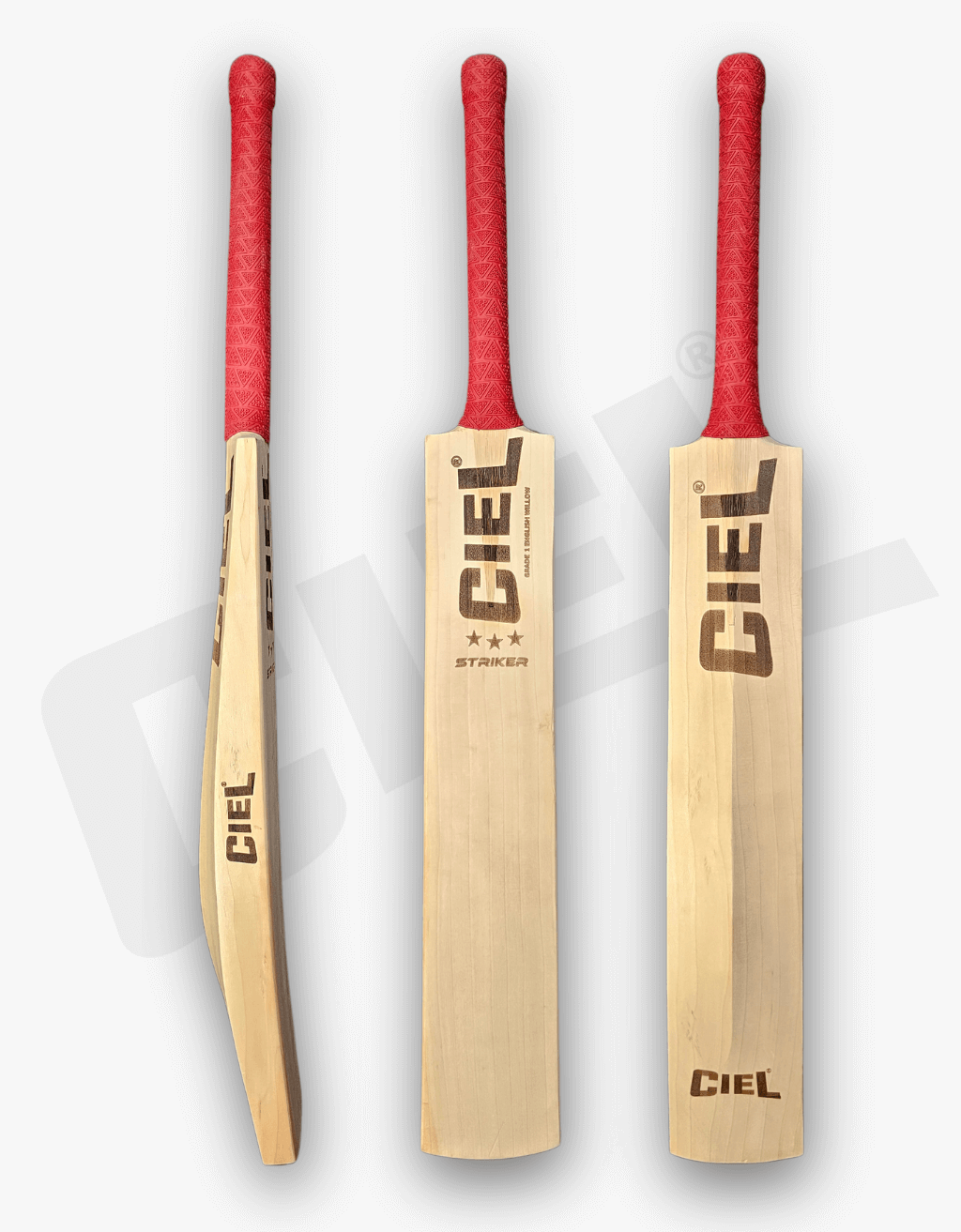
Top 10–15% of available English willow clefts. 6–7 grains. 8-stage hydraulic pressed. Fully bespoke. For any club cricketer playing regular leather ball cricket on turf who is ready for their first Grade 1 bat. The performance improvement over Kashmir willow or Club Grade English willow is immediately and unmistakably noticeable.

Top 4–10% of available English willow clefts. 7–9 grains. The same grade that costs Rs.55,000–70,000 at retail — factory-direct at Rs.36,999. For first XI club cricketers who play two or more times a week, this is the bat that matches your level and rewards your investment across a full season.
Frequently Asked Questions
Which English willow bat is best for club cricket in India? +
What grade English willow bat should I use for club cricket? +
Is Grade 1 English willow enough for club cricket? +
Should I buy Grade 1 or Grade 1+ for club cricket? +
What is the best English willow bat for weekend club cricket in India? +
Why does factory-direct from Meerut matter for my grade decision? +
I play both T20 and 40-over cricket. Which grade and profile should I choose? +
The right English willow bat for your level of club cricket.
Grade 1 from Rs.23,999. Grade 1+ at Rs.36,999. Player Grade at Rs.49,999. All factory-direct from Meerut. All bespoke. WhatsApp Akshat or Utkarsh at +91 95481 82993 with your playing level, batting style and height — we will recommend the exact bat, profile and handle before you spend anything.