
Cricket Bat Size Guide: Which Size Is Right for Your Height?
Cricket Bat Size Guide: Which Size Is Right for Your Height?
Getting the bat size wrong does not just affect performance — in younger players, it permanently damages technique. A bat that is too large forces a child to grip harder, shorten their backlift, and lean on their bottom hand for control. By the time a coach notices, the habits are ingrained and can take years to correct. At Ciel Sports, we manufacture cricket bats in Meerut and ship them to players across 50+ countries. This is the complete size guide — with the full size chart, the physical tests every player should use, and the mistakes that no parent or coach should make.
- Why size matters more than most players realise
- How to measure correctly before consulting the chart
- The complete cricket bat size chart — Size 1 to Long Blade
- Junior sizes explained: Size 1 to Harrow
- Adult sizes explained: SH, LH, and LB
- Short Handle vs Long Handle vs Long Blade: the real differences
- The two physical tests that confirm the right size
- Harrow: the transition size and its edge cases
- The 5 bat sizing mistakes that damage players
- What sizes does Ciel Sports offer?
- FAQ — 7 sizing questions answered by the manufacturer
1. Why size matters more than most players realise
A bat that is the wrong size does not just feel uncomfortable. For adults, it reduces performance — affecting timing, balance, and shot execution. For juniors, the consequences are more serious: the wrong size actively prevents correct technique from developing.
For adults: what the wrong size costs you
A bat that is too long forces the adult batter to stand too upright — the natural stance becomes unbalanced, the bat drags along the ground at the toe in the backlift, and follow-through becomes awkward. A bat that is too short causes excessive bending at the knees, an unnatural posture, and reduced reach on full deliveries. Either error manifests as mistimed shots and reduced shot range — problems most players attribute to technique when the equipment is the actual cause.
For juniors: what the wrong size costs the player
When a junior player uses a bat that is too large or too heavy for their height and strength, something very specific happens:
- They cannot swing it freely — so they grip tighter, which kills feel and timing
- The shortened backlift — they lift the bat less high because the weight at the top of the swing is too much
- Bottom-hand dominance — the weaker top hand cannot control the heavy bat, so the stronger bottom hand takes over, creating an across-the-line hitting habit
- Stance compensation — leaning or crouching to manage the bat length rather than adopting a natural, balanced stance
These are not just bad habits. They are structural compensations that the player's body has built around equipment that was too big. Correcting them requires dismantling the compensations before rebuilding correct technique — a process that takes far longer than simply getting the right bat in the first place.
"There can sometimes be a tendency to buy a slightly bigger bat in the hope that the young player will grow into it. A bigger bat will weigh more and may prove too heavy — and the added length means the handle jabs into the wrist area and cramps the batsman's play. I would much rather a bat be the right size and worn out from runs scored, than be too big and still look new after two seasons."
— VKS Cricket, London — one of the UK's most experienced cricket retailers2. How to measure correctly before consulting the chart
Before looking at any size chart, measure the player's height accurately. Do not estimate. Height measurement errors of even 2–3cm can affect size selection at certain transition points on the chart.
3. The complete cricket bat size chart — Size 1 to Long Blade
| Bat size | Height (ft/in) | Height (cm) | Approx age | Bat length | Notes |
|---|---|---|---|---|---|
| Size 1 | Under 4ft | Under 122cm | 4–6 yrs | ~61cm (24in) | First bat. Must feel almost weightless. |
| Size 2 | 4ft – 4ft 3in | 122–130cm | 5–7 yrs | ~64cm (25in) | Technique bats. Kashmir willow recommended. |
| Size 3 | 4ft 3in – 4ft 6in | 130–137cm | 6–9 yrs | ~67cm (26in) | One-piece construction typical at this size. |
| Size 4 | 4ft 6in – 4ft 9in | 137–145cm | 8–10 yrs | ~70cm (27.5in) | First bat to develop real technique with. |
| Size 5 | 4ft 9in – 5ft 1in | 145–155cm | 10–13 yrs | ~73cm (28.5in) | English willow recommended from this size up. |
| Size 6 | 5ft 1in – 5ft 4in | 155–163cm | 12–15 yrs | ~76cm (30in) | Most popular junior size. Last junior size before Harrow. |
| Harrow | 5ft 4in – 5ft 6in | 163–168cm | 13–16 yrs | ~79cm (31in) | Transition size. Also suits shorter adults. |
| Short Handle (SH) | 5ft 6in – 6ft | 168–183cm | Adult | ~85cm (33.5in) | Standard adult bat. Used by 90%+ of adult cricketers. |
| Long Handle (LH) | 6ft – 6ft 4in | 183–193cm | Adult | ~87cm (34.5in) | Same blade as SH. Handle ~2.5cm longer. |
| Long Blade (LB) | Over 6ft 4in | Over 193cm | Adult | ~87cm (34.5in) | Same handle as SH. Blade ~2.5cm longer. For very tall players. |
Height charts give you the correct size in the majority of cases. But arm length, playing style, physical strength, and personal preference all influence the final decision. Two players of identical height can prefer different sizes — which is exactly why the physical tests in Section 7 must always follow the chart. At transition points (e.g. a player right at 5ft 4in between Size 6 and Harrow), try both before deciding.
4. Junior sizes explained: Size 1 to Harrow
Sizes 1–3: Foundation years (Under 9)
The smallest bats are primarily about introducing children to cricket safely and enjoyably. At this age, the priority is not technique — it is contact, confidence, and fun. Bats in sizes 1–3 are typically one-piece construction or very light Kashmir willow. They do not need to be expensive, and English willow is not necessary or recommended. The bat must feel almost weightless in the child's hands — if they have to strain to lift or swing it, it is too big.
Sizes 4–5: Technique development (Ages 8–13)
This is where bat selection starts to genuinely matter for development. From Size 4 upward, children are beginning to learn and reinforce batting techniques — stance, backlift, shot selection. A correctly sized bat at this stage is essential. English willow is recommended from Size 5 onward for players playing with a hard leather ball. The lighter density of English willow compared to Kashmir willow at the same bat size means the child can maintain freer movement and better pickup, which directly supports correct technique development.
Size 6: The most important junior size
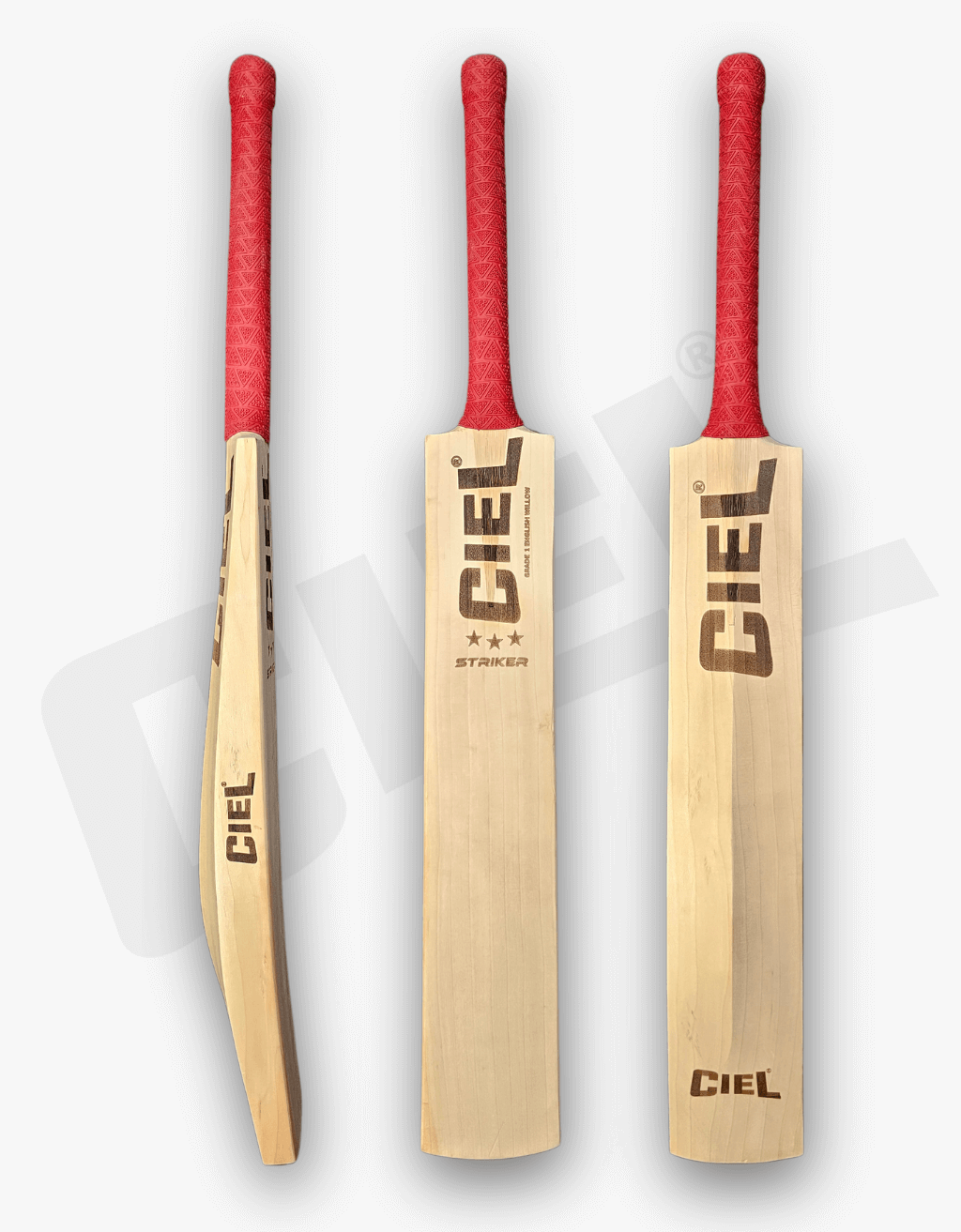
Size 6 is the largest junior size and the most commonly misused. Players in the Size 6 range (5ft 1in–5ft 4in, ages roughly 12–15) are at the stage where their batting technique is being consolidated — the habits formed here follow them into adult cricket. A correctly sized Size 6 bat allows a player to develop a full backlift, play through the line, and control the bat with their top hand. At Ciel Sports, the Striker (Grade 1 English willow) is available in Size 6 — the same grade and pressing quality as the adult version, in the right size for this age group.
Harrow: the overlooked transition
Harrow sits between Size 6 and Short Handle — and is one of the most important and least-discussed sizes in cricket. Players in the Harrow range (5ft 4in–5ft 6in) are at a genuine transition: too tall for Size 6 (they will feel cramped), not yet fully grown into a Short Handle (which may feel slightly long and heavy). Skipping Harrow and going directly from Size 6 to Short Handle is a common error that forces players into a bat that is too big at a critical developmental stage.
5. Adult sizes explained: SH, LH, and LB
6. Short Handle vs Long Handle vs Long Blade: the real differences
Players often ask whether they should choose LH or LB as a taller player. Here is the honest breakdown of when each makes sense:
| Factor | Short Handle (SH) | Long Handle (LH) | Long Blade (LB) |
|---|---|---|---|
| Blade size | Standard | Standard (same as SH) | Larger (~2.5cm longer) |
| Handle length | Standard | ~2.5cm longer than SH | Standard (same as SH) |
| Total bat length | ~85cm | ~87cm | ~87cm |
| Weight vs SH | Base weight | ~Same weight (extra handle is light cane) | ~28g heavier (extra blade is willow) |
| Pickup vs SH | Standard | Slightly lighter feeling (weight shifted up) | Slightly heavier feeling (weight shifted to toe) |
| Best for | Players 5ft 6in–6ft. 90%+ of adult cricketers. | Players 6ft–6ft 4in. Technical players needing reach. | Players 6ft 4in+. Power hitters. Back-pain sufferers. |
The key insight: LH adds reach, LB adds hitting surface
This is what most guides do not explain clearly. If you are a tall player whose problem is that you have to bend too low to bat comfortably — you need Long Handle. The longer handle lets you hold the bat higher without stooping. If you are a very tall player whose problem is that the blade feels too short to reach deliveries comfortably — you need Long Blade. The longer blade extends your reach lower, toward full deliveries on a good length.
Most taller players (6ft–6ft 4in) need LH rather than LB. LB is primarily for players above 6ft 4in, or those with specific back or posture issues that benefit from a longer blade.
Because the Long Blade adds approximately 28g of willow at the bottom of the bat, it naturally shifts the centre of gravity toward the toe. This makes the bat feel slightly heavier in the pickup. Very tall players who use LB often request slightly lighter weights on the scale to compensate — so that the pickup remains balanced. At Ciel Sports, when ordering an LB, we recommend specifying 20–30g lighter than your preferred SH weight to achieve the same pickup feel. WhatsApp +91 95481 82993 and we will advise the exact specification.
7. The two physical tests that confirm the right size
Once you have found your size on the chart, these two tests confirm it physically. Both should be done before purchase — or, if buying online, as soon as the bat arrives.
A correctly sized bat feels like a natural extension of your arms. In the hip test, the handle sits at your hip — not your knee, not your chest. In the stance test, the bat rests on the ground, moves freely through the backlift, and does not drag or catch during the shot. If both tests pass — the size is right. If either test reveals discomfort, extension, or awkwardness — trust the test over the chart and try the adjacent size.
8. Harrow: the transition size and its edge cases
Harrow deserves its own section because it is the most misunderstood size in cricket equipment — and the decisions made at the Harrow stage often define a player's equipment preferences for the rest of their career.
When Harrow is the right choice
- Players between 5ft 4in and 5ft 6in who have outgrown Size 6 but find a Short Handle slightly awkward in the stance test
- Early-growth junior players (ages 13–15) who are physically ready for a larger bat but whose strength has not yet caught up with their height
- Adult players under 5ft 6in who find Short Handle bats feel too long and heavy, and prefer the lighter pickup and shorter handle of a Harrow
When Harrow is not the right choice
- Players above 5ft 6in — the shorter handle will reduce reach and feel cramped
- Players who are already playing adult cricket competitively — the smaller blade and lighter weight of Harrow puts them at a disadvantage against adult bowlers
- As a "stepping stone" to avoid a Short Handle for a player who is ready for SH — there is no benefit to an extra size step for a player who passes the stance test in SH
The Harrow-to-SH transition
The transition from Harrow to Short Handle is significant — it involves a jump of approximately 6cm in total bat length and a weight increase of 100–200g. This is one of the largest single jumps in the size chart. Players should not make this transition until the Harrow bat passes both physical tests as "too small" — not because they are ready for the next size up. The Harrow stage can last 6 months or two full seasons depending on the player's growth rate.
9. The 5 bat sizing mistakes that damage players
10. What sizes does Ciel Sports offer?
- Striker (Grade 1 English willow — Rs.21,999): Size 3, Size 4, Size 5, Size 6, Harrow, Short Handle, Long Handle, Long Blade
- Dominator (Grade 1+ English willow — Rs.34,999): Size 5, Size 6, Harrow, Short Handle, Long Handle, Long Blade
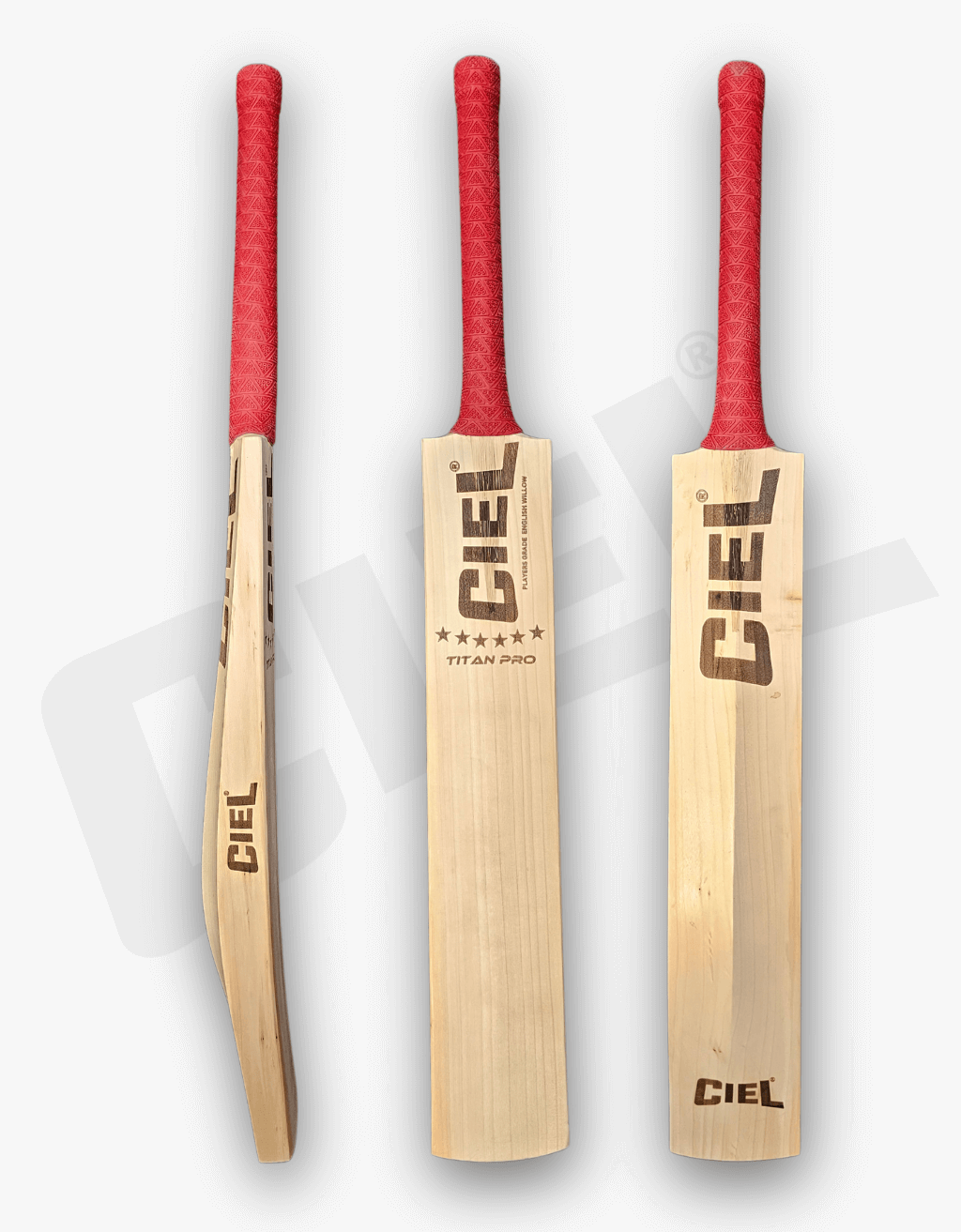
- Titan Pro (Player Grade English willow — Rs.39,999): Harrow, Short Handle, Long Handle, Long Blade
- Player Edition Kashmir willow (Rs.5,999): Size 3 to Short Handle
- Not sure? WhatsApp +91 95481 82993 with the player's height and age and we will confirm the exact right size before you order


11. Frequently asked questions — answered by the manufacturer
What size cricket bat do I need for my height? +
What is the difference between Short Handle, Long Handle, and Long Blade? +
How do I know if a cricket bat is the right size? +
What size cricket bat for a 10-year-old? +
Should I buy a bigger bat for my child to grow into? +
Can a short adult use a Harrow bat? +
What size bat does a 13-year-old need? +
Not sure which size? WhatsApp us directly.
Tell us the player's height, age, and playing level and we will confirm the exact right size and profile before you order. Every Ciel Sports bat is available in multiple sizes — from Size 3 junior to Long Blade adult. Factory-direct from Meerut. Free shipping India. Ships to 50+ countries.