
What Is an English Willow Cricket Bat?The timber, the tree, the anatomy and the pressing — everything that sits behind the price
Almost every explanation of English willow starts with the price and works backwards. This one starts with the tree, because once you understand why this particular timber and no other, everything else about a cricket bat makes sense.
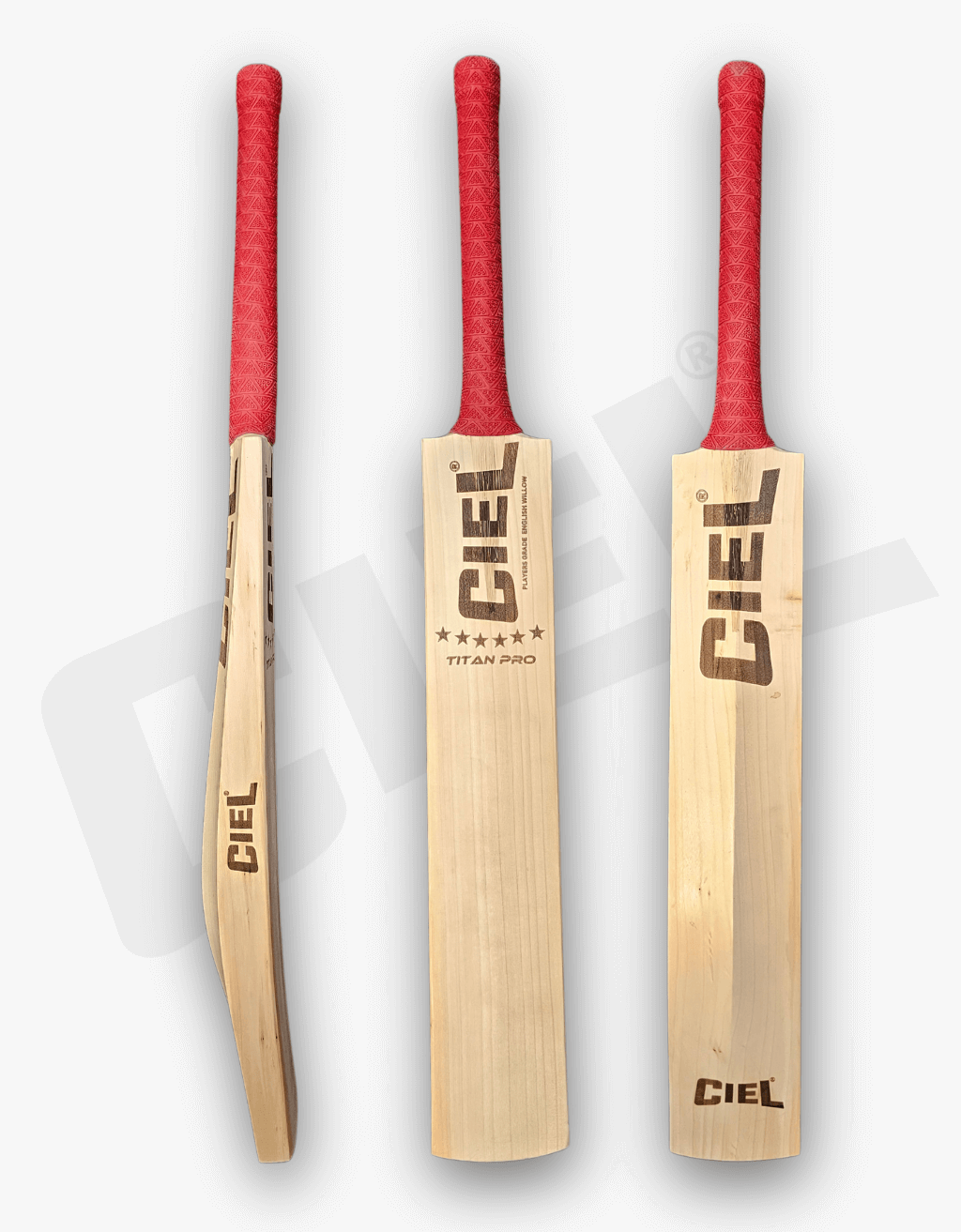
The timber: Salix alba caerulea
English willow is not a general description. It is a specific variety of white willow — Salix alba var. caerulea, the cricket bat willow — grown almost entirely in England for this one purpose.
It is not grown at scale anywhere else, which is why bat makers in Meerut, in England and in Australia alike all import the same timber from the same place. The bat can be made anywhere; the willow comes from one.
Why no other wood works
A cricket bat has to do two things that normally pull against each other.
It has to return energy to the ball, which usually means dense, springy timber. And it has to be light enough to swing quickly, because a bat you cannot get through the line is useless however well it hits.
Most timbers force a choice:
- Dense hardwoods return energy superbly and are far too heavy at cricket bat dimensions.
- Light softwoods swing fast and absorb energy rather than returning it. The ball dies on contact.
- Brittle timbers split rather than compress under repeated impact.
English willow does all three jobs at once. Its cellular structure is unusually fibrous and low in density, so a blade can be thick enough to return serious energy while staying light. And because it is fibrous rather than brittle, it compresses under impact instead of splitting.
That combination is genuinely rare in timber, and it is the whole reason cricket bats have been made from this one species for two centuries rather than from something more obviously robust. Nobody chose willow because it was tough. They chose it because nothing else is both light and elastic at the same time.
From tree to cleft — fifteen years
A cricket bat willow takes around fifteen years to reach bat-making size. Then:
| Stage | What happens |
|---|---|
| 1 · Felling | The trunk is cut into rounds roughly the length of a bat blade. |
| 2 · Splitting | Each round is split rather than sawn, so the split follows the natural grain instead of cutting across it. Each wedge is a cleft, and each cleft becomes one bat. |
| 3 · Seasoning | Clefts are dried until moisture content sits in the correct band. Too wet and they will not press properly; too dry and they become brittle. |
| 4 · Grading | Fibre straightness, density evenness toe to shoulder, absence of soft patches or internal cracking. Everything a grader judges is judged here, before a single cut. |
| 5 · Pressing | Hydraulic compaction in progressive stages. Ours is eight. |
| 6 · Shaping | The profile, edges, spine and toe are cut by hand. This is where a bat becomes your bat. |
| 7 · Handle & finish | Cane handle spliced in, bound with twine, toe guard fitted, grip applied, engraving cut. |
Only a fraction of each tree yields usable clefts, and the higher grades are a small fraction of those. That scarcity is most of what separates a ₹7,999 bat from a ₹59,999 one — not the workmanship, which should be identical.
The anatomy of a cricket bat
Ten parts, each doing a specific job.
Blade
The hitting part, cut from a single cleft of willow. Everything below is a feature of it.
Face
The front, where the ball is struck. Should be flat and consistent — any shaping here would put uneven load into the blade.
Edges
The sides at their widest. Ours run 38–43mm depending on the bat. Edges do their work on cross-bat shots, where contact happens away from the centre.
Spine
The ridge running down the back. Its height and where it peaks define the profile — which decides where your sweet spot sits and how the bat picks up.
Concaving
Willow scooped from the back along the edges, removing weight while keeping the edges thick. A shaping decision within a profile, not a profile itself.
Toe
The bottom of the blade, and the weakest point on any bat — it is end grain, so it absorbs moisture faster than anywhere else. Ours ship with a reinforced toe guard fitted.
Splice
The V-shaped joint where the cane handle enters the blade. Never oil it — oil weakens the glue join, and splice separation is one of the harder repairs.
Handle
Multi-piece Sarawak cane with rubber inserts between the layers. Its job is to absorb the jarring a hard ball sends up the bat, which is why it is cane rather than willow.
Binding
Twine wound around the handle under the grip, holding the cane together under load. If it frays the handle loses structural support. Check it whenever you change the grip.
Grip
Rubber, and consumable. It perishes with heat, sweat and age, and a bat that slips costs you shots. Change it once or twice a season.
Pressing: what it does and why stages matter
Pressing is the step that turns seasoned willow into something that can face a cricket ball.
Raw willow is fibrous and relatively soft. A hard ball striking it would dent the surface rather than bounce off it, and the fibres would lift and separate. Pressing compacts the timber under hydraulic pressure so it absorbs and returns impact instead.
The reason it is done in stages rather than all at once is that willow needs to be compacted progressively. Pressure raised gradually across the face, the edges and the toe hardens the surface without making the blade brittle. Rush it and you get a bat that is hard and dead rather than hard and lively.
Ours is eight stages. Two to four is common across the industry, because pressing takes time and time costs money. It is the single biggest invisible difference between bats at similar prices, and it is the question we would most encourage you to ask any seller.
Under-pressed willow gives itself away immediately: it marks on the first delivery, the ball dies on contact, and the face shows seam impressions after one session. No amount of knocking in rescues a bat that was not pressed properly.
Pressing is not knocking in
These get confused constantly. Pressing is done by the manufacturer, before shaping, to the whole blade. Knocking in is done by you, after you receive it, to consolidate the surface layer. A bat needs both — six to eight hours of mallet work on most English willow, more on the big profiles. The full guide is here.
What makes one bat better than another
Two things, and they are not equally important.
The grade of the cleft — how mature it was, how straight the fibre runs, how even the density is. That affects consistency of response and how long the bat stays good. Our guide to grades covers what graders actually check.
The profile — where mass sits along the blade, which decides where your sweet spot is and how the bat picks up. This changes how a bat plays more than the grade does, which is why we include profile choice free on every bat. Our profile guide covers all five.
One thing that should not vary is the workmanship. Every bat we make gets the same eight press stages, the same Sarawak cane handle, the same reinforced toe guard and the same 12-month warranty, from the ₹7,999 Surge to the ₹59,999 Reserve Edition.
Why a perfect face should worry you
Genuine English willow carries character. Specks, mineral streaks, colour variation and butterfly stain — a reddish-brown marking from minerals the tree took up as it grew — are all normal, and none of them affect performance.
A bat face with no marks at all should make you curious rather than pleased. Perfectly clean faces are often produced by bleaching or heavy sanding, and heavy sanding removes surface material from a blade that was pressed to a specific thickness. You are looking at a bat made to photograph well.
We would rather sell you a cleft with a butterfly stain and straight fibre than a bleached one with neither.
What an English willow bat is not
- Not for tennis ball cricket. It works, but it is heavier and slower than a hard tennis bat, needs hours of preparation, and you would be putting an expensively prepared bat through matting for no benefit.
- Not indestructible. It is a natural material selected for response, and higher grades are less durable because a finer cleft is lighter and less dense.
- Not ready to play. Six to eight hours of knocking in before it faces a new ball, without exception.
- Not always the right choice. On rough abrasive club grounds a denser Kashmir willow bat from ₹4,499 will frequently outlast an English willow one costing twice as much.
Questions players ask
What is an English willow cricket bat? +
A bat made from Salix alba caerulea, a variety of white willow grown almost entirely in England for the purpose. The timber is unusually fibrous and low in density, which lets a blade be thick enough to return serious energy while staying light enough to swing quickly. Very few timbers can do both at once, which is why cricket bats have been made from it for two centuries.
Why is English willow used for cricket bats? +
Because it solves a problem most timbers cannot. Dense woods return energy well but are too heavy at cricket bat dimensions. Light woods swing fast but absorb energy rather than returning it. English willow is simultaneously light and highly elastic, so a bat can be both big and swingable. It is also fibrous rather than brittle, so it compresses under impact instead of splitting.
How long does an English willow tree take to grow? +
Around fifteen years to reach bat-making size, and only a fraction of each tree yields usable clefts. The higher grades are a small fraction of those. That scarcity is most of what separates an entry-level bat from a premium one - not the workmanship, which should be identical.
What is a cleft? +
The wedge of willow split from a log, which becomes one bat. Clefts are split rather than sawn so the split follows the natural grain, then seasoned to bring moisture content into the correct band before pressing. Everything a grader judges - fibre straightness, density evenness, absence of soft patches - is judged at the cleft stage, before a single cut is made.
What are the parts of a cricket bat? +
The blade is the hitting part, made of willow. Its front is the face, its sides are the edges, and the ridge down its back is the spine. The bottom is the toe, usually protected by a fitted toe guard. The handle is cane, joined to the blade at the splice, bound with twine and covered by a rubber grip.
Why is the handle made of cane rather than willow? +
Because it has a different job. The blade needs to return energy; the handle needs to absorb the jarring that a hard ball sends up the bat. Multi-piece cane with rubber inserts between the layers does that far better than solid timber, which would transmit the shock straight into your hands. Ours use Sarawak cane on English willow bats.
What is pressing and why does it matter? +
Pressing compacts the timber under hydraulic pressure so it absorbs impact rather than denting under it. It is done in progressive stages with the pressure raised gradually across the face, edges and toe. Ours is eight stages; two to four is common across the industry, because pressing takes time and time costs money. Under-pressed willow feels dead and marks on the first delivery.
Do English willow bats need knocking in? +
Yes, always. Six to eight hours on most English willow bats, spread over two to three weeks, plus one or two light coats of raw linseed oil first. Knocking in compresses the surface fibres into a harder skin so a hard ball cannot lift and separate them. Skipping it is the single most common way a new bat is destroyed, at any price.
Can English willow be used for tennis ball cricket? +
It can, but it is a poor choice. An English willow bat is heavier and slower through the line than a hard tennis bat, it requires hours of preparation you would rather not do, and you would be putting an expensively prepared bat through matting and concrete for no benefit. Hard tennis bats exist for that format.
Why do English willow bats have marks and specks? +
Because willow is a natural material. Specks, mineral streaks, colour variation and butterfly stain - a reddish-brown marking from minerals the tree took up as it grew - are all normal and none of them affect performance. A face with no marks at all should make you curious rather than pleased, because it has often been bleached or heavily sanded.
How much should an English willow cricket bat cost? +
Ours run from ₹7,999 to ₹59,999, buying direct from our factory with no distributor, wholesaler or retailer margin. Below about ₹6,000, a bat sold as English willow is almost certainly Kashmir willow or poplar described as something it is not. The scarcity of the timber sets a genuine floor.
How long does an English willow bat last? +
Two to four seasons of regular cricket with proper preparation and sensible storage, and often more. What ends most bats early is not impact - it is skipped knocking in, over-oiling, or damp storage. On rough abrasive grounds a denser Kashmir willow bat will frequently outlast an English willow one costing twice as much.
Next: what the grades actually describe, how profile changes a bat more than grade does, or the full buying guide across all nine of our English willow bats.
Made in Meerut · Built to order
Nine English willow bats. Only the cleft changes.
₹7,999 to ₹59,999 · 8-stage hydraulic pressing on every bat · Sarawak cane handle · Reinforced toe guard · Five profiles, three handle shapes, seven sizes, your exact weight, laser engraving — all free · 12-month handle warranty